In the world of outdoor lifestyle photography, grit, instinct, and vision are everything. Jonathan Herre brings all three, and more, to every frame. From hiking remote trails to capturing cinematic brand stories in extreme weather, his work speaks to those who crave authenticity and adventure. We caught up with Jonathan to explore the passion, process, and perseverance behind his lens.
You’ve carved a niche in outdoor lifestyle and off-road storytelling. Was that intentional from the start or did it evolve naturally?
It evolved naturally, I suppose. I always knew I wanted to be working with people. I’ve always loved meeting new people, and learning about where they come from and what their experiences are. My favourite photographers have always been photojournalists, so my style is pretty heavily influenced by telling the story, whether it's for brand, product, or advertising. When I started shooting, it just took on a life of its own, as things do, and it evolved into what it is today.
You work in some pretty rugged conditions. What’s the one piece of gear you wouldn’t compromise on?
A solid rain jacket. I bought mine over 10 years ago while hitchhiking through New Zealand, and just used it again on a recent shoot. It poured as we hiked to a remote lake in Colorado, and well, at least that part of me stayed dry.
You often feature vehicles, rugged trails, and remote setups. What’s your secret to making those feel cinematic instead of catalogue?
I think that boils down to style and influences. I’ve always been enthralled with cinema, and wanted my imagery to convey that look and feel. So many influences exist that we’re shaped by, as artists. Just as each motion picture has its “feel”, so does each individual shoot we go on. I love applying that to whatever we’re shooting.
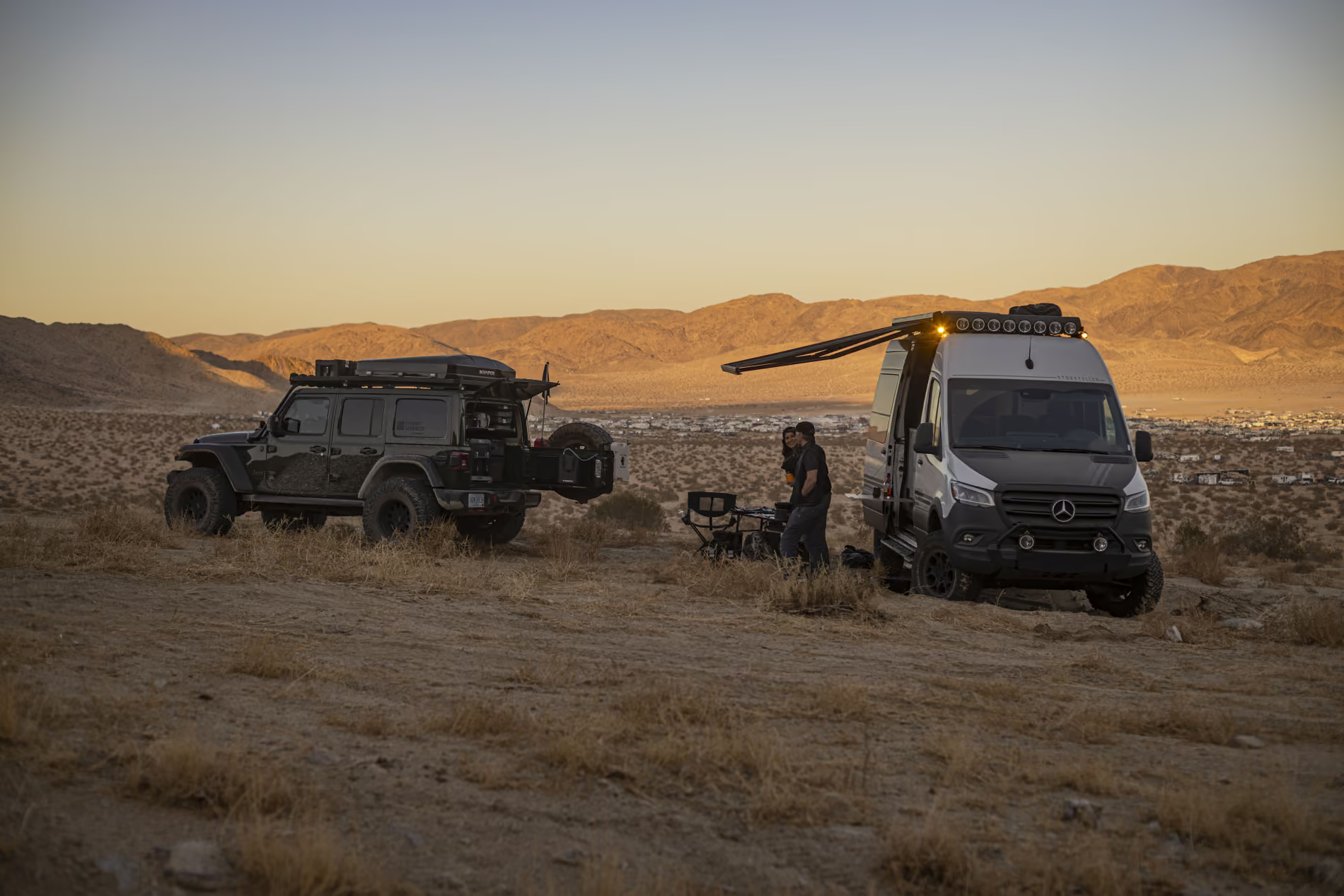
You have a talent for shooting product in context, how do you balance brand needs without interrupting the narrative?
I think that’s a product of clear communication with the client prior to the shoot, how the product is designed to be used, and a collaboration in finding the best way to visually show that. Keeping a level head and seeing the big picture during the shoot can help save the day. Shooting quick, run-and-gun style often needs to be slowed down, but seeing the big picture might mean that I know we're shooting a roof rack, and you know we’re shooting a roof rack, but if the public sees a standalone photo, will they know it’s a roof rack? And then adapting to make it explanatory. That’s where telling the whole story comes into play and is so important.
Do you think your social presence brings in more brand work, or is it more of a personal outlet?
I think it all depends. I know for some photographers that social media is how they get all of their clients. For me, it’s more of a personal outlet. For instance, my Instagram page is designed to be viewed a specific way, as the overall page, not just one square at a time. I think as a tool, it’s a good overview for Art Buyers, Creative Directors, and clients to get a feel for what I shoot, and how.
Have you noticed any shifts in what brands are asking for now vs. 3–5 years ago?
Oh yeah, the unicorn is real. If you can become dangerous with a myriad of different skills (photo, motion, directing, and helping in other areas), you’ll obviously be more marketable to the client. Even when I’m tasked with just photos, I’m always shooting B-roll and doing add-ons to make myself even more attractive for the next go-round.
How do you define success in your work now compared to when you started?
Great Question! My perspective has definitely evolved. I think when I started I was a bit of a dreamer, thinking that every photo I took would somehow change the world. Now? I work to develop personal connections with the people behind the brands that value my work and appreciate my efforts. It’s become more about the people and less about the paycheck, if that makes sense.
How important is preproduction planning in your process?
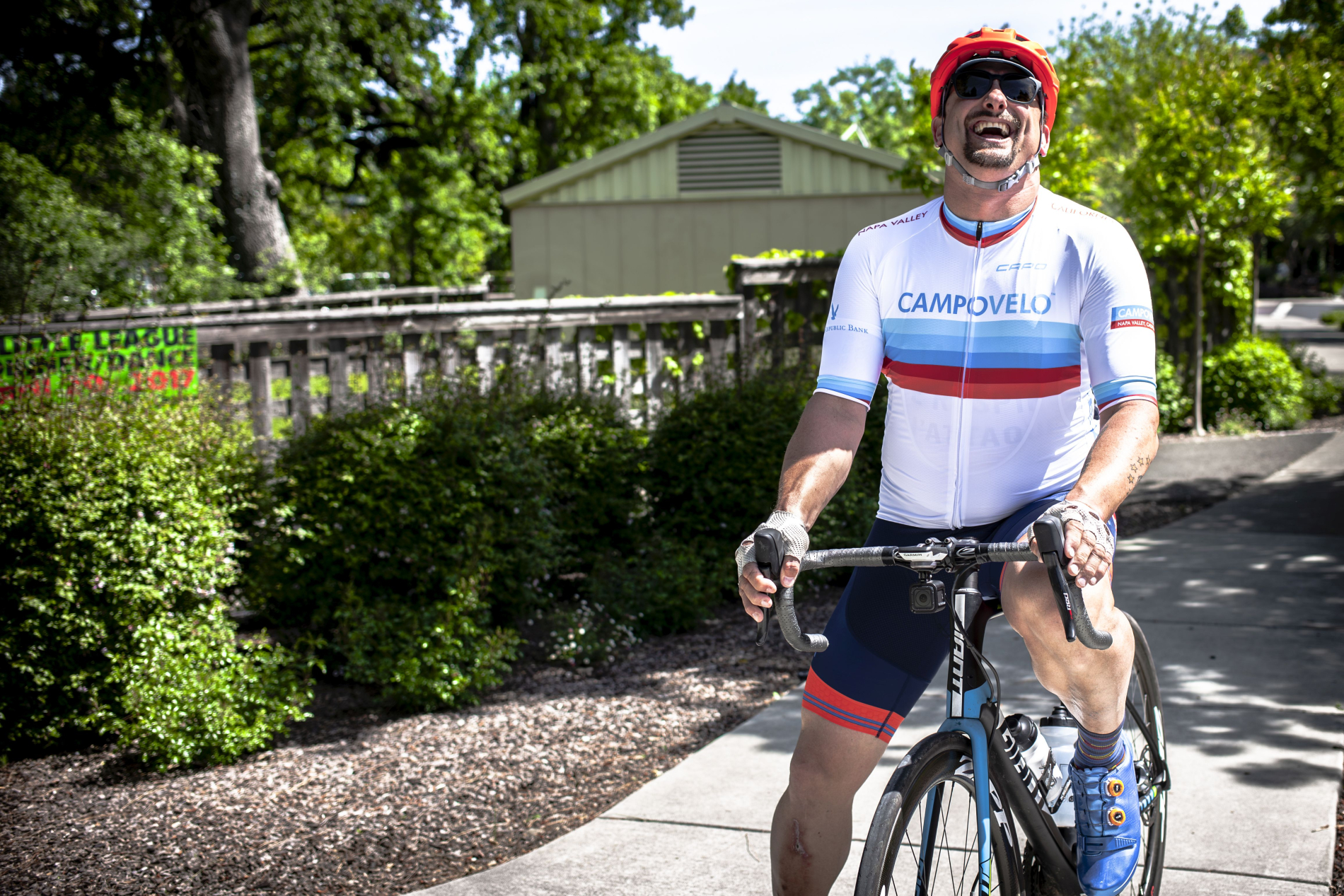
Extremely important! Redundancy and preparation are really key to pulling off a bigger shoot. Lining out locations, timing, and models is key. Since I shoot mostly in remote places, maps and beta going into projects is paramount to the success of nailing what we’re trying to accomplish.
What photo or project in your portfolio are you most proud of, and why?
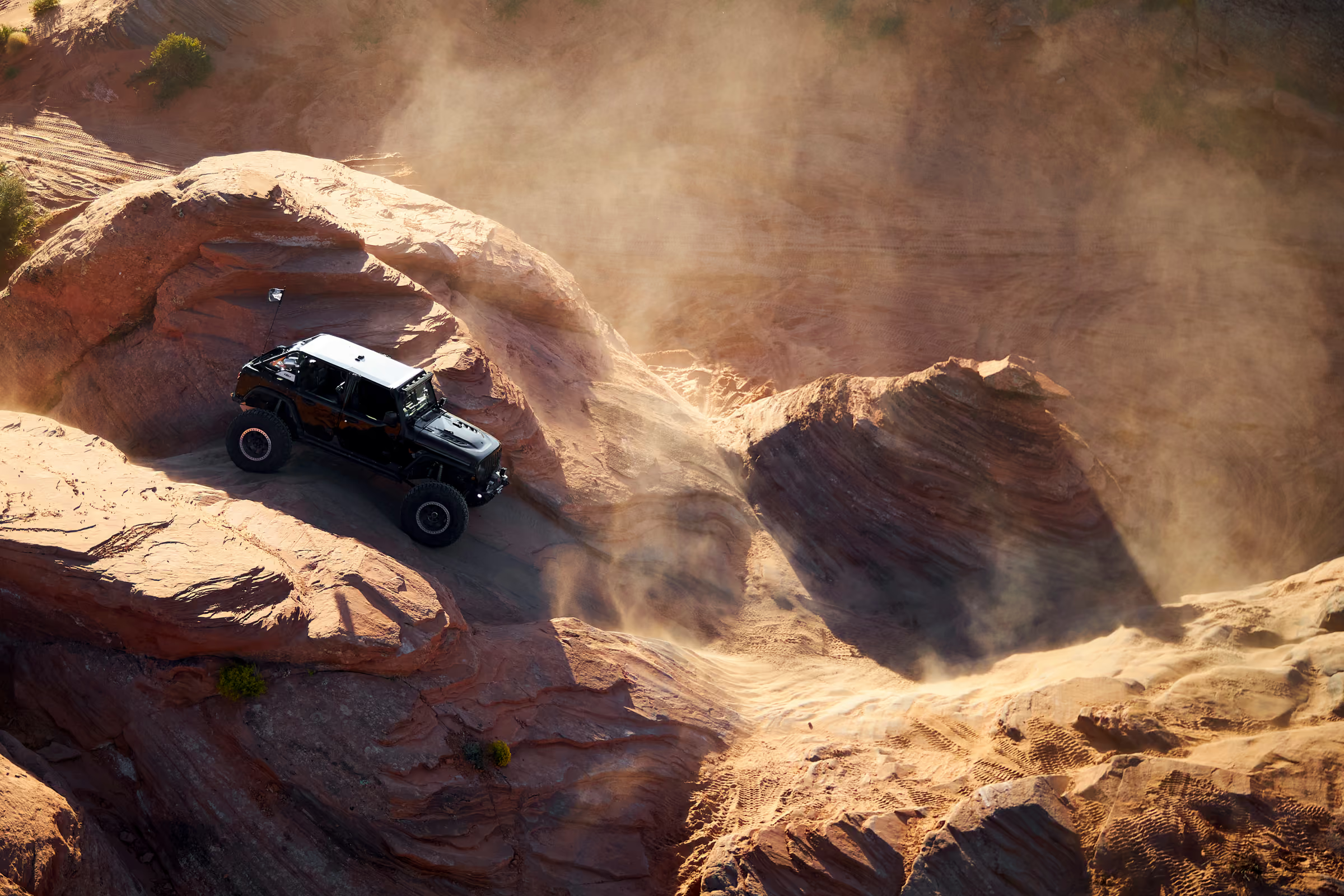
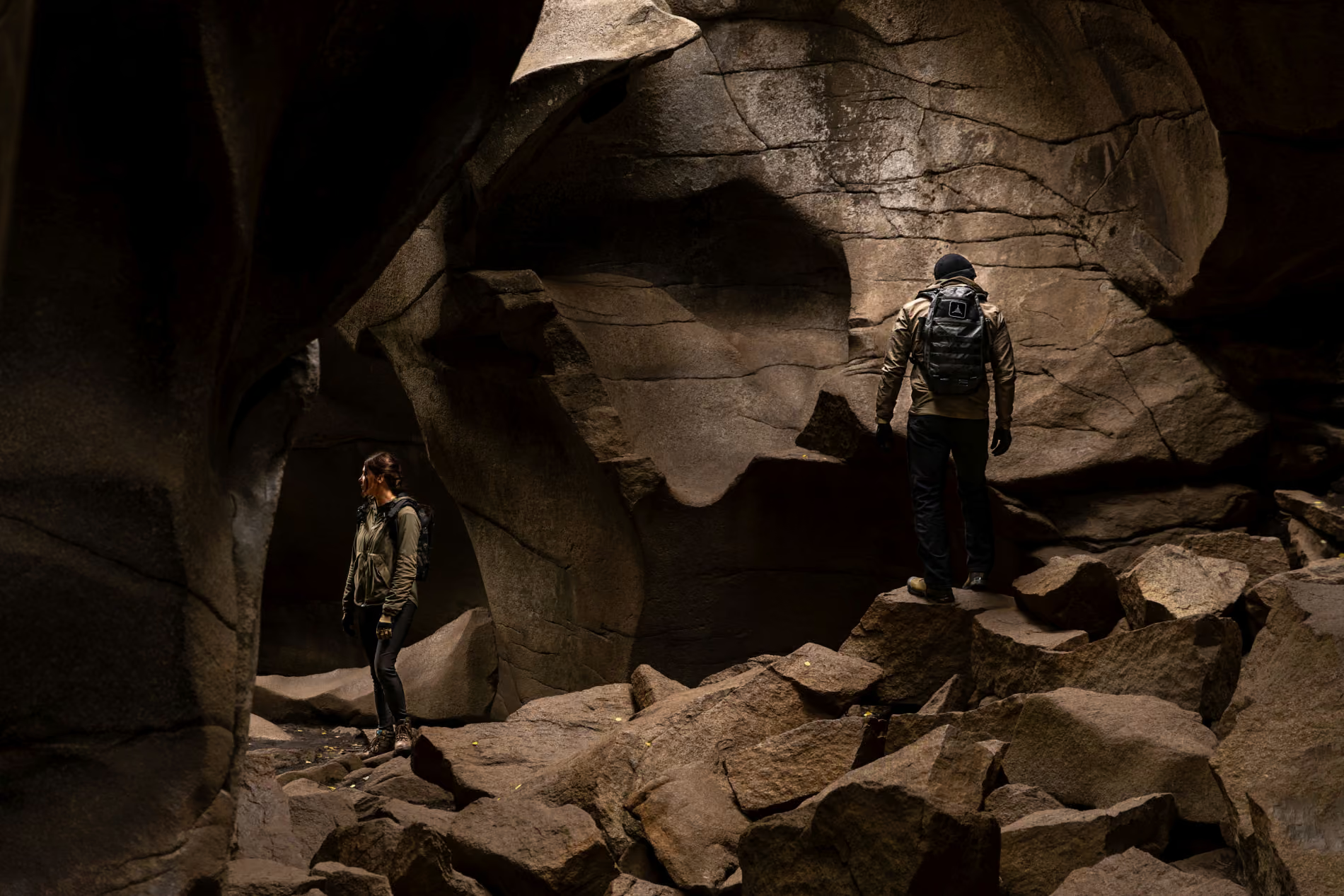
Two specific shoots/clients come to mind. My most recent work with Triple Aught Design. We met at a trailhead early in the morning, and hiked in to this remote mountain lake. We knew there might be rain, and it turned into a big storm with rain, hail, thunder, lightning, and us coming back drenched, but shooting the entire time. We got a killer location, drama in the weather, and great photos for a client I’ve had on my radar for over a decade. Early on in the year, we did a two day shoot for Dometic/Frontrunner in the desert that included vehicles driving toward me on a dusty, dry lakebed. Most photographers might be hesitant to drench or dust out their gear, but to me, it’s how we get the best, most authentic material.
I’ve found that almost all the shoots in bad weather and challenging conditions in remote places are my favourites. I love shooting in snow, rain, standing in freezing rivers, dodging waves, being in the middle of dust clouds, etc. I think it’s part of what sets me apart is that I’m willing to put myself in those situations where I think regular shooters might hesitate to go.
Is there a photographer or creative whose aesthetic you admire or draw inspiration from?
Absolutely. I was heavily influenced by the guys I assisted when I was coming up. Pat Molnar, Scott Lowden, and Tim Zimmerman for sure. Embry Rucker and Sinuhe Xavier still influence my shooting, especially when I find myself stuck or overthinking things. When I first started, I wanted to be a war photographer, like James Nachtwey and Dan Eldon, so their take on the world we live in heavily influenced the way I approach a shoot and problem solve on set.
Have you ever had to abandon a shoot due to conditions, and how do you handle delivering that kind of news to a client?
I’ve never had to “abandon” fully. We’ve had to relocate when a location didn’t work out due to conditions out of our control (avalanches, permits not coming through, almost being arrested) but we were always able to pivot and get an image or series that the client loved. That’s where the pre-pro work comes in handy. It prevents the panic that’s a natural response, to just, “Oh, we’re going to relocate to this other spot and do this other awesome thing instead.”
How much of your fieldwork ends up being shot with natural light, versus supplemented with modifiers or off-cam lighting?
I like to keep the lighting minimal. Bounces or one-to-two light setups are what work best for me. That being said, I’m comfortable on set with multiple different lighting setups, running multiple sets, and working with larger crews. That’s the benefit of coming up as an assistant with some outstanding photographers.
Do you prefer when clients give a detailed brief or when they trust you to lead creatively?
In a perfect world, I’d like at least an outline or brief. It shows me that the client has thought it through and knows their own needs. Too often it’s been “Oh, just do your thing” and then, after the fact, they’re either surprised or disappointed that photographers aren’t mind readers. If the client provides at least a mood board, brief, or outline, or even a designated shot list, I’m confident I can knock that out quickly, but it also provides a clear ‘jump off point’ to all the bonus and extra media that often times ends up better than the conceptual shot.
What projects or goals are you dreaming about next, personal, commercial, or otherwise?
I’m trying to get onto some longer, harder, and farther expedition-type media. I want to test myself and grow, both as an individual and as a creator. I’m hoping to get to the Arctic in 2026, as well as some deeper, more rugged wilderness. The eventual goal is to direct and put out a documentary.
What do you wish more creatives understood about the benefits of being part of a curated industry platform like Production Paradise?
That it’s more of a collaboration between you and the team, and that not much is set in stone. There’s a genuine support system to tap into, and even when it’s a tad overwhelming, you still have people and creatives to reach out to for help or to bounce ideas off of.
A huge thank you to Jonathan Herre for sharing his journey, insights, and inspiration with us. We can’t wait to see where your next adventure leads!
Enjoyed this interview? Discover more inspiring conversations with our members here.