With a background in design, a love for painting, and decades behind the camera, Joe Pellegrini brings a handcrafted, highly considered approach to commercial photography. Known for his clean, deceptively simple images, often hiding complex builds and clever visual twists, Joe’s work spans food, beverage, and product campaigns for top-tier clients. In this candid interview, he shares how personal creative pursuits fuel his commercial projects, what it’s really like working with major brands, and how the photography landscape has evolved from film to AI-enhanced workflows.
How do other forms of creativity, whether painting, film, or design, shape the way you think about your work?
I’ve always had some kind of art project going painting, building things, experimenting with textures, and that background constantly influences the way I approach commercial photography. My design training from college comes through every time I’m arranging a shot. It helps me think about composition, hierarchy, color balance, and how the final image will work with headlines, typography, and layouts. It also makes collaboration with art directors much smoother, because we’re speaking the same visual language when we talk about crops, negative space, or how an image will read in different formats.
Painting, in particular, creates a kind of creative balance for me and helps me look at composition in a completely different way. When I’ve been shooting nonstop and everything gets fast-paced and technical, painting slows me down and reconnects me to the more intuitive side of image-making. There’s no brief, no client, no timeline, just exploration, color, and texture. That freedom shifts how I think about space, proportion, and visual flow, and I see that influence show up in my photography. It changes how I build color palettes, how I light for mood, and how I compose an image so it feels more like a still life than a straightforward product shot.
I also build many of my own surfaces, backgrounds, and small set pieces. That hands-on process comes directly from my art and design habits. Creating something physically gives me a deeper understanding of how materials interact with light, texture, and color, things that are critical in food and commercial photography. It also helps me develop a more distinctive, custom look for clients because the environments are literally made by hand for the shot.
In the end, painting, design, and photography all inform one another. They push me to stay curious, build things, and bring a more crafted, personal touch to my commercial work.
What’s one thing you’ve learned from working with big brands?
One thing I’ve learnt from working with big brands is that the scale of the project comes with a much larger cast of characters. Big brands shoot more often, so they’ve built entire systems and entire teams to shepherd projects from start to finish. There’s a whole hierarchy of roles to decipher. Sometimes you are on a Teams call and think: What do all these people actually do?
Over time, I’ve learned it’s crucial to identify one key point of contact. Someone who understands the internal structure well enough to get you to the right person when you need answers. They may not always know everything themselves, but they know who does, and they understand the value of getting clear information before shoot day. Most of the time, it’s the agency producer, but sometimes I work closer to the client.
As the shoot approaches, the number of questions increases: Should the box be shown open or closed? What’s the correct serving size? Which ingredients are allowed to be shown? How is the product arriving and in what condition? What spoon, plate, glass, or prop was approved? And so on.
Someone in the organisation has that knowledge, but you don’t want to be searching for them on the day of the shoot. Getting those answers ahead of time makes the entire production smoother and prevents surprises when everyone is standing around waiting.
So, the biggest thing I’ve learned is how important it is to navigate that structure gracefully. To know who the decision-makers are, who the experts are, and who can actually get you the information that will keep the shoot moving efficiently. When you figure that out, the whole process becomes much more manageable.
When you look back at your early work, what do you see differently now, what’s changed the most in how you shoot or think about images?
When I look back at my early work, especially from the film days, I see just how much the entire industry has shifted. Back then, we shot fewer frames and fewer setups per day because every decision mattered. You had to commit to your lighting, your composition, and your styling in-camera. There wasn’t the safety net of digital retouching or the ability to “fix it later,” so the craft was slower, more deliberate, and very detail-driven in the moment.
Today, retouching and post-production are baked into the creative process from the very beginning. It’s no longer something that happens at the end, it’s part of the strategy. We often shoot elements separately, build scenes in layers, and light things more generally because no one knows exactly how the assets will be used. A single image might end up on a dozen different background colors, or be adapted to multiple layouts, or be mixed into older assets. Flexibility matters as much as precision.
What’s changed most in how I shoot is that I’m now thinking in terms of possibilities rather than a single final frame. I’m capturing options: variations, clean plates, elements that can be moved around or re-composited. It’s a different mindset from the film era, when everything was locked in at capture. Now, part of the craft is anticipating how an image might evolve in post and giving the retoucher everything they need to build the final story.
In some ways, it’s made me more adaptable and collaborative. In other ways, I miss the simplicity of committing to a shot and knowing that what you saw on the ground glass was what you were going to get. But evolution has made the process more dynamic, and it’s pushed me to think about images not just as photographs, but as flexible assets that can live in a wide range of contexts.
Every photographer has their visual fingerprint, how would you describe yours?
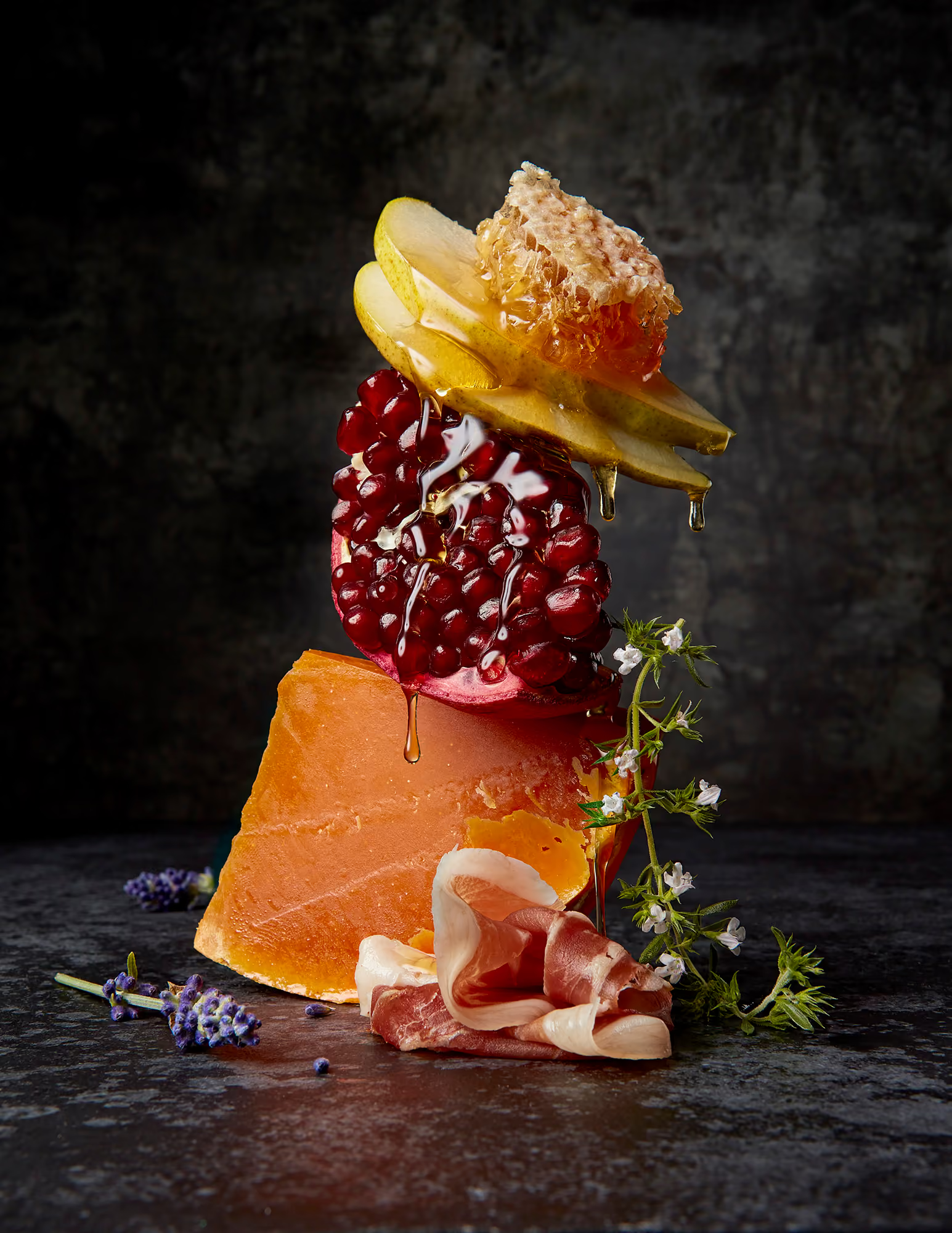
I'm drawn to images that feel clean and simple on the surface, but that simplicity usually hides a lot of technical work behind the scenes. That’s a big part of my visual fingerprint: the balance of restraint and complexity. I like images that look effortless, but are actually built with intention, problem-solving, and a lot of craft.
I’m also influenced by vintage and classic visual sensibilities, the kind of work where lighting, composition, and practical effects do the heavy lifting. There’s an honesty to that approach that I still love. Maybe it comes from starting in the film era, but I have a real respect for the craft, for the hands-on parts of making an image, for doing things practically whenever possible. I enjoy engineering a shot the way older photographers and filmmakers did, using real physics and clever rigs rather than leaning too hard on digital shortcuts.
At the same time, I like finding little visual puns or a touch of humour in my images. Nothing loud or gimmicky, just subtle moments where the concept or execution has a wink to it. That combination of clean visuals, thoughtful construction, and a playful twist is something I keep coming back to.
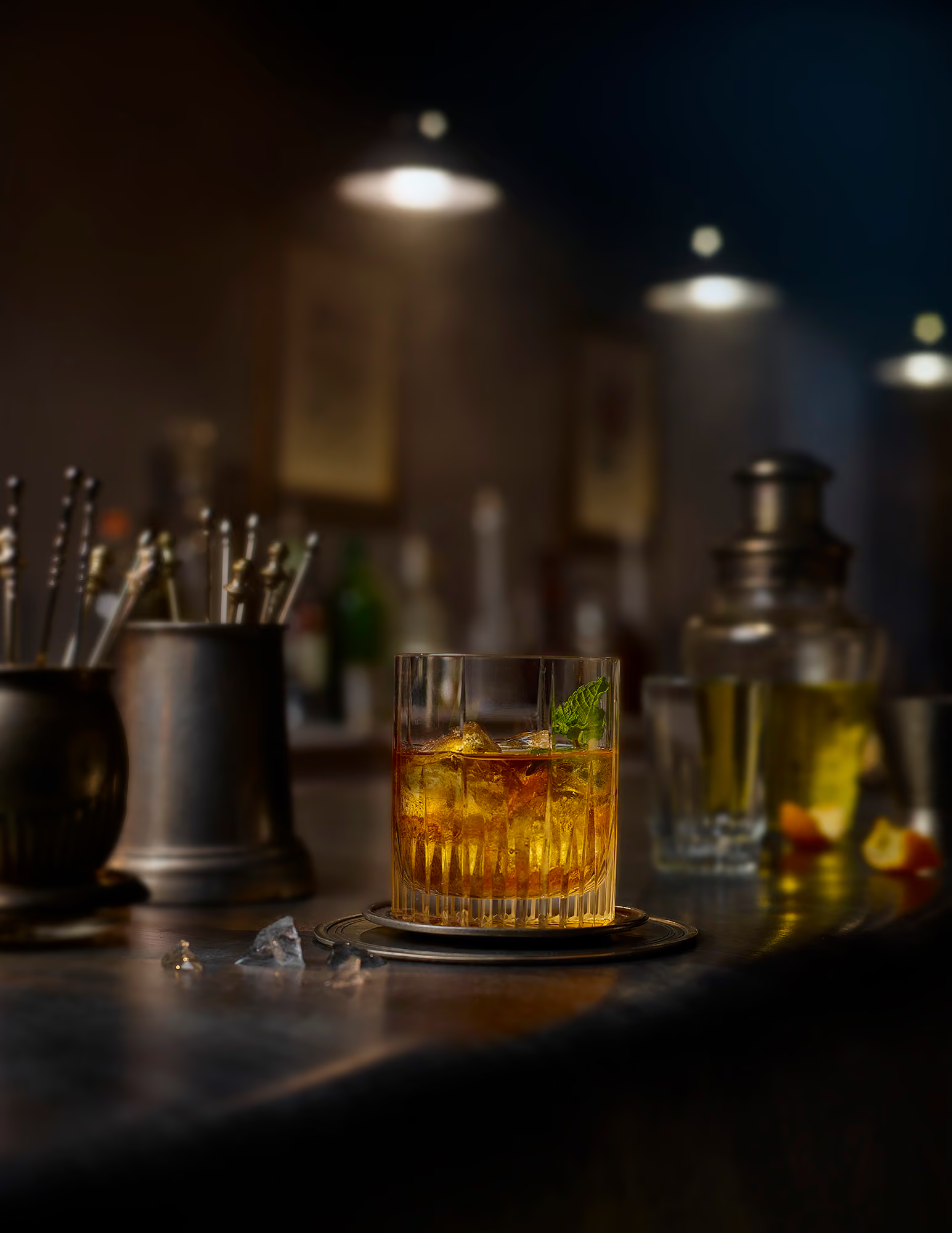
My “Slosh” image is a good example. On paper, it’s just liquid spilling from a glass, a simple moment. But the way it was shot is where the craft comes in. Instead of tossing the glass or faking it later, I built a rotating set inspired by old Hollywood “walk on the walls” gags. It’s a classic technique repurposed for a modern still-life. The final image looks straightforward, but the method gives it a little bit of surprise and personality beneath the surface.
So if I had to sum up my visual fingerprint, it would be this: clean, simple images with classic sensibilities, built with respect for the craft, and often containing a subtle visual pun or a bit of humour, all engineered with more complexity than you might expect at first glance.

Over decades in the industry, how has the commercial photography landscape changed (on the client side, pricing, technology, marketing)?
I often find myself starting sentences with “back in the olden days,” partly as a joke, partly because the industry really has changed that much. When I began, especially in Chicago, the ecosystem of agencies looked completely different. There were more of them, they were deeply involved, and you almost never worked directly with the client. Agencies acted as true creative partners, they were trusted to go on set, work with the photographer, and stand by the decisions when it came time to review the work. You felt like everyone was on the same team, building something together.
My rep could walk into multiple agencies in a single afternoon, show the portfolio, and meet with several art buyers and creatives. There was a rhythm to that system, a sense of continuity and relationship-building that kept the work flowing in a very organic way.
The creative direction was different too. Layouts were much looser, often literally sketched with stick figures. They served as a starting point, not a prescription. There was room to add your own ideas, to collaborate, to solve problems together. You were hired for your vision, not just your ability to execute someone else’s.
Today, everything is much more tightly controlled and far more expensive to produce. Budgets are squeezed, timelines are shorter, and there are more stakeholders involved at every step; marketing teams, brand teams, legal, digital, strategy, and sometimes multiple agency layers. By the time the photographer is brought in, the concept is often already highly polished: near-final comps, exact angles, exact crops, and sometimes even a “finished” AI or CGI mockup. I understand it: there’s a lot of money on the line, and a lot of people who need to be satisfied or protected. But it does mean that the photographer is often collaborating less and executing more.
Technology has played a role too. Retouching, CGI, AI, and tightly integrated digital workflows have created new expectations. Clients want flexibility, assets that can be used across multiple formats, backgrounds, and campaigns. That shifts the process from creative exploration to a kind of modular production mindset.
Overall, the biggest changes have been in how many people are involved, how tightly defined the work is before it reaches the photographer, and how little informal collaboration there is compared to the older agency model. It’s still exciting, just a very different landscape than the one I started in.
When you begin a new project (say a beverage or food shoot), what are your first creative steps moodboarding, sketches, lighting tests, etc?
When I start a new project, whether it’s a beverage, a food item, or a full campaign, my first creative steps are all about gathering visual cues and clarifying the direction. Over the years, I’ve built up a large folder of reference material that I collect constantly. It could be a color palette that caught my eye, an interesting surface texture, a lighting style, or even a background from an unrelated image that has potential. Sometimes it’s a terrible photograph, but there’s one small element in it that sparks an idea. And sometimes it’s just something I thought of while driving and scribbled down before it disappeared.
Recently, I’ve also started running a few early thoughts through AI engines. I’m not looking for finished concepts, more like small nuances, unexpected angles, or compositional ideas that I can fold into my own approach. It’s just another brainstorming tool, like a hyperactive sketch assistant.
Once I feel like I have enough inspiration, I’ll start sketching. These aren’t polished illustrations, they’re simple drawings with notes, arrows, lighting ideas, and rough compositions. I’ll create a small mood board to accompany them, pulling in references for color, texture, or attitude. This becomes the starting point for the conversation with the food stylist, prop stylist, or anyone else on the creative team. We’ll talk through the concepts, and I’m always open to their input, because their expertise can shift the direction in really valuable ways.
After those discussions, I’ll often refine or resketch the ideas and put together a clear plan that the whole crew can reference on shoot day. I’m a very visual thinker, so even if a client only gives me a written description, I’ll sketch something. Sometimes, literally just a square and an oval, to make sure we’re all picturing the same thing before we start lighting or building anything.
For me, these early steps are less about locking everything in and more about creating a shared visual language. It ensures that by the time we’re on set, everyone understands the intention behind the images, and we can focus on execution, problem-solving, and refining the details that bring the shot to life.
After all these years behind the camera, what still excites you when you walk onto a new set?
Even after all these years, I still get a genuine jolt of excitement when I walk onto a new set. There’s something magical about watching an idea go from a sketch in my notebook or a picture in my head to a fully lit scene appearing on the monitor. That transformation never gets old. It still surprises me in the best way, that you can shape light, color, texture, and physics until they match the image you’ve been carrying around in your imagination.
What really energises me is the process itself: the tweaking, the problem-solving, the collaboration with the team. Those moments when someone suggests a small adjustment, or we shift a surface two inches, or the stylist makes one perfect change, and suddenly the whole shot clicks. It’s the collective craft that makes the final image what it is, and being part of that creative puzzle still feels like a privilege.
And honestly, part of what excites me is that I still love this work as much as I did when I started. I’m endlessly fascinated by how an image comes together. I’ll look around the set and think, how is everyone else not as mesmerised by this as I am? I know not everyone gets fired up about a perfectly placed highlight or a shadow that finally falls the right way, but that’s exactly the kind of thing that keeps me coming back.
In the end, the excitement comes from the combination of imagination, craft, and teamwork. Every shot is a chance to make something that didn’t exist the day before, and that still feels incredible.
Thank you, Joe, for sharing your insights, process, and passion with us. Your dedication to craft and curiosity continues to inspire.
If you enjoyed this interview, check out more stories from our talented members here.